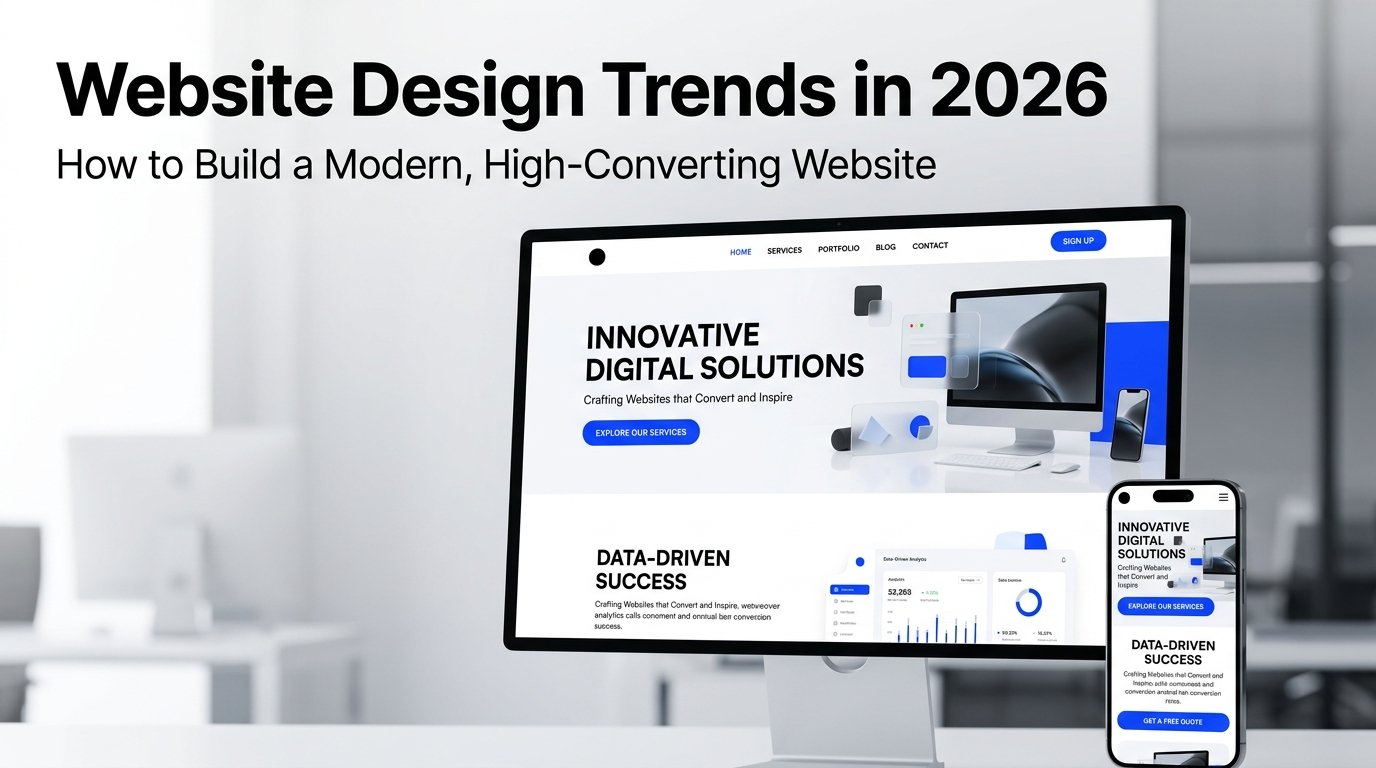
Website design in 2026 is about more than creating an attractive online presence. Businesses need websites that load quickly, deliver seamless experiences across devices, build trust, and turn visitors into customers. Modern design combines visual appeal with usability, accessibility, performance, and clear communication. Whether you are launching a new business website or improving an existing one, understanding current web design trends can help you stay competitive. At Kinetix Designs, we believe that an effective website should not only look professional but also support measurable business growth.
1. Minimalist Website Design
Minimalist website design continues to be an effective approach for creating clean, professional online experiences. By using clear layouts, balanced spacing, simple typography, and carefully selected colors, businesses can help visitors focus on important information. Removing unnecessary elements also makes navigation easier and reduces visual clutter. A well-designed minimalist website communicates a brand’s message clearly while maintaining a modern and sophisticated appearance.
2. Mobile-First and Responsive Design
With many users browsing websites on smartphones, mobile-first design is essential for modern businesses. A responsive website automatically adapts its layout, images, navigation, and content to different screen sizes. Buttons should be easy to tap, text should remain readable, and important information should be accessible without unnecessary scrolling. A consistent experience across mobile phones, tablets, and desktop computers improves usability and helps businesses reach more potential customers.
3. Faster Website Loading Speeds
Website performance directly affects user experience. Visitors may leave if a page takes too long to load, especially when browsing on mobile networks. Optimizing images, reducing unnecessary scripts, using efficient code, and enabling browser caching can improve loading speed. Modern image formats such as WebP and AVIF can also reduce file sizes when implemented appropriately. Regular performance testing helps identify problems and keeps your website responsive as its content grows.
4. AI-Powered Website Experiences
Artificial intelligence is creating new opportunities to personalize website experiences and improve customer support. AI-powered chatbots can answer common questions, guide visitors toward relevant services, and provide assistance outside regular business hours. Personalization tools can also recommend relevant products or content based on user behavior, where appropriate. Businesses should implement AI thoughtfully, ensuring that automated features remain useful, accurate, transparent, and easy for visitors to control.
5. Bold Typography and Visual Hierarchy
Typography plays a major role in communicating a brand’s personality and directing visitors through a website. Bold headlines, readable body text, and carefully chosen font combinations can make content more engaging and easier to scan. Visual hierarchy helps users understand which information matters most, from the main headline to supporting details and calls to action. Choosing accessible font sizes, appropriate contrast, and consistent text styles creates a polished and professional experience.
6. Clear Calls to Action That Encourage Conversions
A high-converting website guides visitors toward a specific next step, such as requesting a quote, booking a consultation, contacting a business, or purchasing a product. Clear calls to action should use straightforward language and stand out from surrounding content without disrupting the overall design. Placing relevant buttons near service descriptions, pricing information, and important decision points can make it easier for users to take action. Testing different button labels and placements can help identify what works best for your audience.
7. Interactive Elements and Subtle Animations
Interactive design can make a website feel more engaging when used with purpose. Hover effects, smooth transitions, interactive product galleries, and subtle scrolling effects can provide useful feedback and highlight important content. However, excessive animation can distract visitors and affect performance. Keep interactions lightweight, ensure essential content remains accessible without animation, and respect reduced-motion preferences to create an experience that feels modern without sacrificing usability.
8. Accessibility and Inclusive Web Design
Accessible website design helps people with different abilities navigate and understand online content. Important practices include providing meaningful alternative text for images, maintaining sufficient color contrast, using descriptive links, supporting keyboard navigation, and labeling form fields correctly. A logical heading structure also helps users and assistive technologies understand page content. Following established accessibility guidance, such as the Web Content Accessibility Guidelines (WCAG), can make your website more inclusive and easier to use.
9. Trust-Building Design and Authentic Content
Visitors are more likely to engage with a business when its website communicates credibility. Clear contact information, genuine customer testimonials, relevant case studies, transparent service descriptions, and professional project examples can help build confidence. Consistent branding and a secure browsing experience also contribute to trust. Businesses should avoid exaggerated claims and fabricated reviews, focusing instead on authentic information that helps potential customers understand their expertise and make informed decisions.
10. SEO-Friendly Website Structure
A modern website should be designed with search engine optimization in mind from the beginning. A logical site structure, descriptive page titles, useful headings, relevant internal links, and helpful content make pages easier to navigate and understand. Fast loading speeds, mobile usability, and well-optimized images also support a better user experience. Although no design guarantees top search rankings, combining technical SEO with valuable content and clear navigation creates a stronger foundation for long-term organic visibility.
Final Thoughts
Building a modern, high-converting website in 2026 requires a balance of attractive design, strong performance, accessibility, and user-focused functionality. From responsive layouts and faster loading speeds to clear calls to action and trustworthy content, every design decision should serve a purpose. Businesses that regularly review their website performance and listen to user feedback can identify opportunities for meaningful improvement.
At Kinetix Designs, we help businesses create professional digital experiences that combine modern website design with functionality and growth-focused strategy. Whether you need a new website or want to improve your existing online presence, investing in thoughtful design can help you communicate your value, engage visitors, and turn more opportunities into customers.
